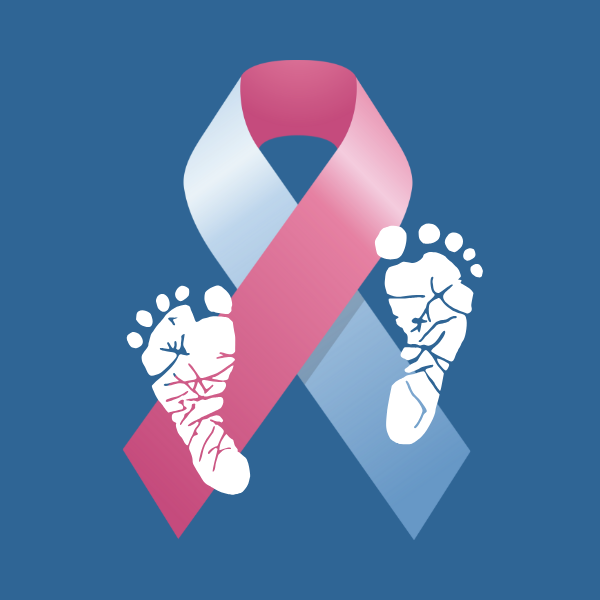
Last month, Governor Evers signed a proclamation recognizing October 15th as Pregnancy and Infant Loss Awareness Day and the month of October as Pregnancy and Infant Awareness Loss Month. Tragically, between ten and twenty percent of all known pregnancies end in miscarriage,[1] and approximately one in every one-hundred-seventy-five babies is stillborn.[2] Because we recognize the inherent value of life from the moment of conception, we mourn with those who have experienced the tragic loss of their babies.
An Illogical Position
In part, the proclamation reads, “This month, the state of Wisconsin joins families, friends, and dedicated individuals, advocates, and organizations across the state in honoring the memory and lives of those lost during pregnancy or infancy and showing encouragement and support for families forever devastated by their loss.”
Ironically, in the proclamation, Evers refers to unborn babies as “lives” not fetuses or clumps of cells. While on one hand Evers loudly supports abortion – the intentional destruction of life in the womb – on the other he recognizes the tragedy of lives lost in miscarriage or stillbirth. His position, the position of many Americans today, is simply illogical. It is logically flawed to sorrow for the unintentional loss of life in the womb while simultaneously celebrating its intentional destruction. The value of life does not rest in whether it’s wanted or planned. Each life holds intrinsic value, and that is why we mourn.
Defining Terms
Since the Dobbs decision overturned Roe v. Wade in 2022, pro-abortion activists have argued relentlessly for the so-called need for unlimited access to abortion. One fearmongering tactic they often employ maliciously twists the tragedy of pregnancy loss into an argument for abortion, intentionally creating paranoia. Understanding the inevitable emotions surrounding pregnancy loss, pro-abortion activists have blurred the lines between abortion and miscarriage, claiming that abortion restrictions result in a lack of access to care for mothers experiencing pregnancy loss.
As is often true, this battle begins with subtle but impactful changes in terminology. To mislead the public into believing that abortion bans affect miscarriage care, many pro-abortion activists claim miscarriages are simply a form of abortion– a “spontaneous abortion.” They are purposefully mixing medical terminology with legal standards to incite confusion. Dr. Allison Linton, an obstetrician-gynecologist and the chief medical officer at Planned Parenthood of Wisconsin, claims, “You can’t separate abortion from miscarriage management. They are the same thing.”[3] Her statement is simply untrue. While at times a procedure used for a miscarriage may be similar to an abortion, there remains a clear distinction between the two: intentions.
While both abortion and miscarriage involve tragic death, one is intentional while the other is not. Miscarriage care and abortion bans can and do coexist.
Sadly, pro-abortion activists and much of the media repeatedly spread the false claim that doctors could be prosecuted for providing miscarriage care. This deliberate misinformation has created widespread confusion about the law, and women have greatly suffered as a result.
Providing Clarification
When pro-abortion activists claim that access to abortion is necessary for miscarriage care, they typically mention anembryonic, ectopic, and molar pregnancies. In each of these atypical pregnancy scenarios, an abortion procedure may be used. Cases such as anembryonic, ectopic, and molar pregnancies or other unfortunate miscarriage situations, are not abortions. In these cases, the baby has already tragically died, and the procedure is simply used to remove the already dead body.
In medical terms, the necessary procedure to remove a deceased unborn child may be called an abortion, but this conflation is different from how we commonly use the word — to describe the intentional termination of a pregnancy. Despite what abortion activists may claim, the use of a procedure for a life-saving measure is clearly different than the use of that same procedure to intentionally end human life.
New Legislation
To eliminate any confusion, Wisconsin legislators are introducing a bill that clarifies the definition of abortion to exclude miscarriage procedures. The bill clearly states that care for miscarriage situations and the removal of anembryonic, ectopic, and molar pregnancies do not fall under the definition of abortion. In cases where the baby must be removed from the mother to save her life, the bill simply requires that doctors make reasonable efforts to save both the life of the mother and her child.
Daniel Degner, president of Wisconsin Family Action, shares his family’s personal experiences with pregnancy loss and miscarriage care:
My wife and I have lost two children from a miscarriage and an ectopic pregnancy. It breaks our hearts when we see advertisements from pro-abortion candidates and groups that use stories like ours to push a “need” for abortion expansion. When we lost our babies, our doctor immediately gave my wife the medical interventions needed to save her life and remove the deceased babies from her womb. For too long, the pro-abortion lobby has sought to cause confusion for families like mine that are going through the tragedy of losing a child in the womb. We hope that this legislation will clarify to women and families around Wisconsin that the intentional killing of an unborn child is not the same as the unfortunate loss of a child through natural means.
Co-author of the bill, Representative Joy Goeban says, “As Wisconsin moves forward with enforcing protections for the unborn, we must also ensure that women facing real medical emergencies, like miscarriage, ectopic pregnancy, or life-threatening complications, receive timely and compassionate treatment without confusion or legal risk.”[4]
A woman shouldn’t have the right to end the life of her child, but she most certainly should receive the best care possible in the event of unexpected and unintentional loss. Likewise, doctors should never have to worry about losing their licenses or facing legal repercussions when performing necessary procedures in pregnancy loss situations.
Sadly, Evers has already promised to veto this bill. Senator Van Wanggaard aptly summarizes Evers’ position: “To be clear, by opposing this bill, Governor Evers and Democrats are saying that ending an ectopic or anembryonic pregnancy or removing a miscarriage SHOULD be considered an abortion.”[5] Evers and other abortion activists are strategically conflating the definition of abortion to contain pregnancy loss scenarios, underhandedly changing the meaning of our laws.
While Evers may claim to care for women experiencing pregnancy loss, his words ring hollow as long as he supports destroying life in the womb and expanding the definition of abortion. If he truly wants to demonstrate compassion to women experiencing pregnancy loss, he should support legislation that eliminates paranoia over healing physically during pregnancy loss so that women can focus their attention on healing emotionally during the difficult process of loss.
In light of Pregnancy and Infant Loss Awareness Day, Wisconsin Family Action offers our heartfelt condolences to those mourning the loss of their babies before or after birth. May God grant you comfort and hope as you mourn.
The work of Wisconsin Family Action is possible because of generous friends who partner with us financially and in prayer. If you value the work WFA does, we invite you to invest in this unique work that is all about you, your family, your faith, your freedom, and your future! As always, we welcome and covet your prayers.
