Updated March 19, 2026
With spring just around the corner, Americans anticipate spring’s biggest sporting event: March Madness. Second in popularity only to the Super Bowl, NCAA’s college basketball tournament gains millions of views for each of the 67 games from the First Four to the Final Four. While no doubt many viewers fill out brackets and follow the games simply because of their love of the sport or as an exciting pastime, many viewers have much more at stake than the win or loss of their preferred team.
Sports Betting: A Growing Concern
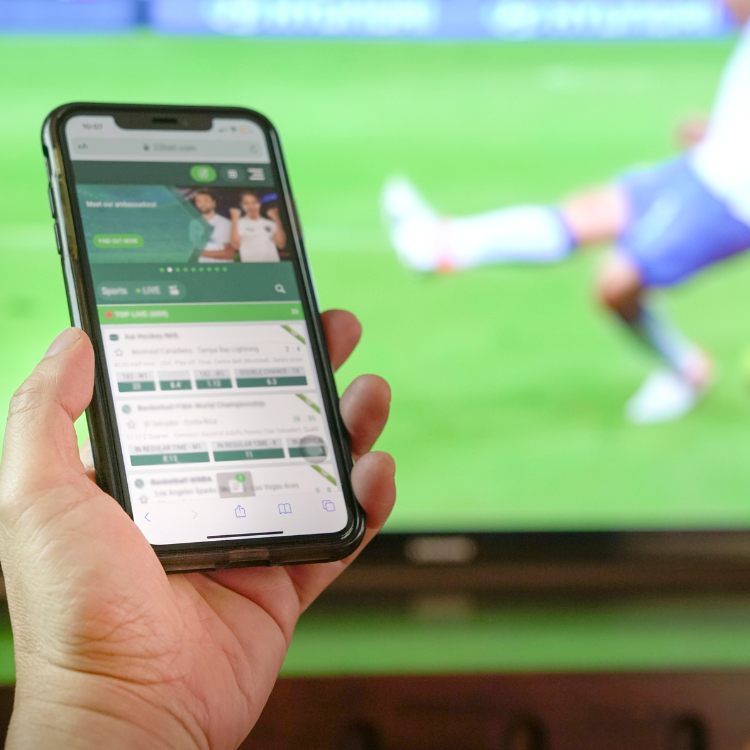
Last year, Americans bet an estimated 3.1 billion dollars on March Madness alone. Since the Supreme Court allowed states to legalize sports betting in 2018, more and more Americans have tried to win big through sports gambling. Just last year, the total amount spent on legalized sports betting increased by 11% with over 1 in 5 adults and over 1 in 10 teen boys placing bets on sporting events. But, even as sports betting increases in popularity, more and more Americans are voicing their concern. A poll conducted by Pew Research found that 43% of U.S. adults say that legalized sports betting is a bad thing for society, up from 34% in 2022. In addition, 40% of adults say betting is a bad thing for sports, up from 33%. Concern has risen sharply in just a few years.
Ironically, March Madness falls in the middle of Problem Gambling Awareness Month. While all forms of gambling can lead to addiction, sports bettors face twice as high a risk for problem gambling as gamblers in general. Studies show that at least ten percent of sports bettors fit the description for problem gamblers. Yet, in the midst of rising concerns, the Wisconsin legislature is considering expanding access to sports betting.
AB 601: Bringing the “Hub and Spoke” Model to Wisconsin
The Wisconsin Constitution currently restricts sports betting to tribal casinos, but Assembly Bill 601 (Senate Bill 592) seeks to expand access to sports betting by allowing online wagers to be placed through servers that are located on native lands. This legislation is known as the “hub and spoke” model and has already passed in Florida and Kansas. In addition, many other states have passed other bills legalizing online sports betting.
Supporters of the bill claim that since Wisconsinites are already participating in online sports betting illegally, the bill simply legalizes currently occurring activities. But their thinking is clearly misguided. Just because an illegal activity is occurring doesn’t mean that we should legalize it. Should we legalize shoplifting because people shoplift? What about drunk driving? Rather than legalizing illegal activity, we ought to seek to put it to a stop.
Until recent years, most Americans viewed sports betting as a vice that led to financial ruin and threatened the integrity of sporting competitions. Although many Americans now see betting has a harmless pastime, the harms remain. All forms of gambling bring ruin on finances, families, and societies. Among other harms, gambling disorders are linked to the highest suicide rates among all addictions.
Long-Term Losses
Ignoring the harms of gambling problems, proponents of the bill claim that it will bring in needed revenues to the state. State Senator Kristin Dasslet-Alfheim says that she expects this law to create a ten percent increase in gambling revenues. While legalizing online sports betting may bring in immediate revenues, lawmakers must look down the road and consider long-term losses.
Research demonstrates the manifold negative effects of gambling. One study found that states that legalized online sports betting experienced an increase in bankruptcy, debt sent to collections, use of debt consolidation loans, and auto loan delinquencies. The authors of the study point out that these results are “substantially stronger for states that allow online sports gambling compared to states that restrict access to in-person betting.” Other research shows that in the never-ending fervor to secure more cash, gamblers often incur massive credit card debt and dry up retirement savings. When funds run out, many turn to illegal methods of gaining cash such as stealing, prostitution, embezzlement, insurance fraud, and the use of loan sharks. The Wisconsin Council on Problem Gambling reports that 65 percent of compulsive gamblers commit crimes to finance their gambling.
Another study found that divorce rates among problem gamblers are forty percent higher than those among low-risk gamblers and non-gamblers. The societal impacts of divorce also wreck financial devastation.
In total, the National Council on Problem Gambling estimates that the annual national social cost of problem gambling is fourteen billion dollars. Furthermore, gambling leads to increase in crime and destruction of healthy families. The magnitude of the effects of problem gambling can never be fully captured in a number. How can we count the impact on children whose parents have divorced or taken their own lives because of gambling?
Increasing access to gambling will only bring more heartache, financial loss, and societal devastation to Wisconsin. Legislators must look long term and recognize that the negative financial and societal effects of legalized online betting far outweigh the immediate increase in revenues.
A Loss for Wisconsin
Sadly, many legislators believe the lie that increased access to gambling will help Wisconsin by bringing in needed revenues. AB 601 passed through the Assembly and Senate with bipartisan support. Sadly, now it just awaits Governor Evers’ signature before becoming law.
Wisconsinites deserve better than increased access to destructive behavior. Legislators who value the health of families and the well-being of society should oppose bills that bring losses to Wisconsin. Meanwhile, parents should encourage their families to enjoy March Madness and bracket competitions without the added risk of betting.
The work of Wisconsin Family Action is possible because of generous friends who partner with us financially and in prayer. If you value the work WFA does, we invite you to invest in this unique work that is all about you, your family, your faith, your freedom, and your future! As always, we welcome and covet your prayers.
